


Cart
0
Corsetry has always been closely connected to the shape of the body. Historically associated with control, support and proportion, the corset has continuously changed alongside the way femininity itself is represented in fashion.
In contemporary womenswear, the corset no longer needs to function as a hidden foundation. It can become the garment itself.
Structure is exposed. Fastenings become part of the design. Transparency is used deliberately. The relationship between the garment and the body becomes visible rather than concealed.
For BÂROFE, corsetry is approached through this tension between precision and softness. A defined shape can exist beside delicate lace. A rigid closure can sit against a sheer surface. The result is not a reproduction of historical corsetry, but a modern interpretation of its most essential idea: using construction to define form.
Structure as a Visible Element
The defining quality of a corset is its construction.
Unlike a soft top that follows the body freely, a corset introduces its own architecture. It creates a boundary, controls proportion and directs attention toward particular lines of the silhouette.
In the OPHELIA Corset, this structure remains intentionally visible.
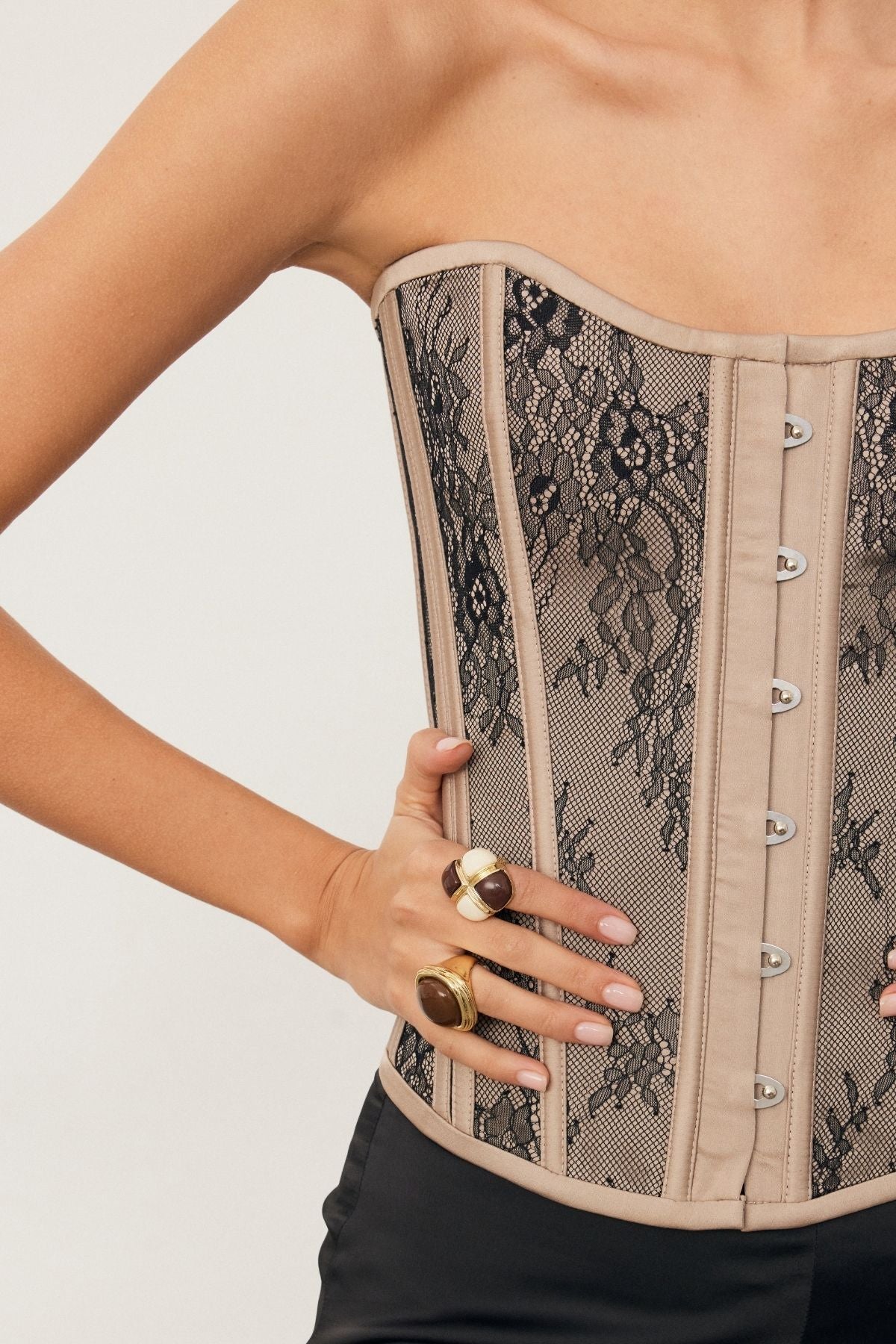
The front metal closure becomes more than a functional element. Its vertical line divides the garment visually, bringing precision to the centre of the body. At the back, the lace-up construction allows the silhouette to be adjusted while preserving the corset's distinctive shape.
Rather than hiding the mechanisms that create the form, the design allows them to become part of its visual identity.
This visibility is important to modern corsetry. Construction itself becomes decoration.
Lace and Contrast
Lace introduces an entirely different language.
Where corset construction can feel controlled and architectural, lace is associated with softness, transparency and intricate surface detail. Bringing these elements together creates contrast.
The OPHELIA Nude & Black Lace Corset uses this contrast directly. Nude tones allow the black lace pattern to remain visible against the body, while the defined corset shape prevents the delicate surface from becoming overly romantic.
The effect comes from balance.
Transparency is present, but it is contained within a precise form. Lace softens the structure without removing its strength.
This relationship between surface and construction is one of the reasons lace corsets remain relevant in contemporary fashion. The fabric changes the emotional character of the garment, while the corset itself maintains clarity of shape.

Sheer Texture Without Lace
Transparency does not always need to come from lace.
The OPHELIA Black Corset explores a darker interpretation through a shimmer mesh surface. Instead of decorative lace motifs, the visual interest comes from light, texture and controlled transparency.
The material allows the body to remain partially visible, while the corset construction creates a clear boundary around it.
This contrast changes the character of the piece.
The result feels less romantic and more graphic. The shimmer of the mesh responds to light, while the metal closure and lace-up back reinforce the precision of the silhouette.
The technique remains rooted in corsetry, but the expression becomes distinctly contemporary.

Defining the Waist
Corsetry naturally brings attention to the waist, but the most interesting modern interpretations do more than simply reduce it.
The waist can act as an anchor for the entire silhouette.
By establishing a defined centre, the proportions above and below it become more visible. Shoulders may appear stronger. A skirt may feel more voluminous. A simple pair of trousers can take on a different balance when paired with a fitted corset top.
This is why a corset can function as both a complete statement and part of a larger look.
Its impact does not end at the edge of the garment. It changes how the surrounding pieces are perceived.
For BÂROFE, this relationship between individual pieces is important. A corset can exist on its own, but it can also create the foundation for a more complex silhouette.
Corsetry Beyond Occasion
The contemporary corset is no longer limited to one context.
Depending on fabric and styling, it can move between eveningwear, tailoring and separates. Lace can introduce delicacy. Mesh can create a sharper mood. A blazer can partially conceal the corset's structure, revealing only selected details beneath it.
This flexibility is part of what makes modern corsetry interesting.
The garment remains highly defined, yet the way it is worn can completely change its character.
Rather than treating the corset as a costume reference, contemporary design allows it to function as a versatile piece of clothing with a strong visual identity.
The Balance Between Strength and Exposure
Perhaps the most compelling quality of corsetry lies in contradiction.
It covers and reveals at the same time.
It restricts one line while emphasising another.
It can appear delicate because of its material, yet powerful because of its construction.
This balance allows the corset to remain relevant even as silhouettes and styling continue to change.
For BÂROFE, the corset becomes a study in this contrast. Structure gives the garment presence. Transparency introduces lightness. Lace and mesh alter the surface, while the construction continues to define the body beneath it.
Modern corsetry is therefore not simply about returning to an older form.
It is about reconsidering what structure can mean when it becomes visible.
Explore the Form
Discover the BÂROFE Tops & Corsets selection, including the OPHELIA Corset in Nude & Black Lace and the OPHELIA Corset in Black.

