


Cart
0
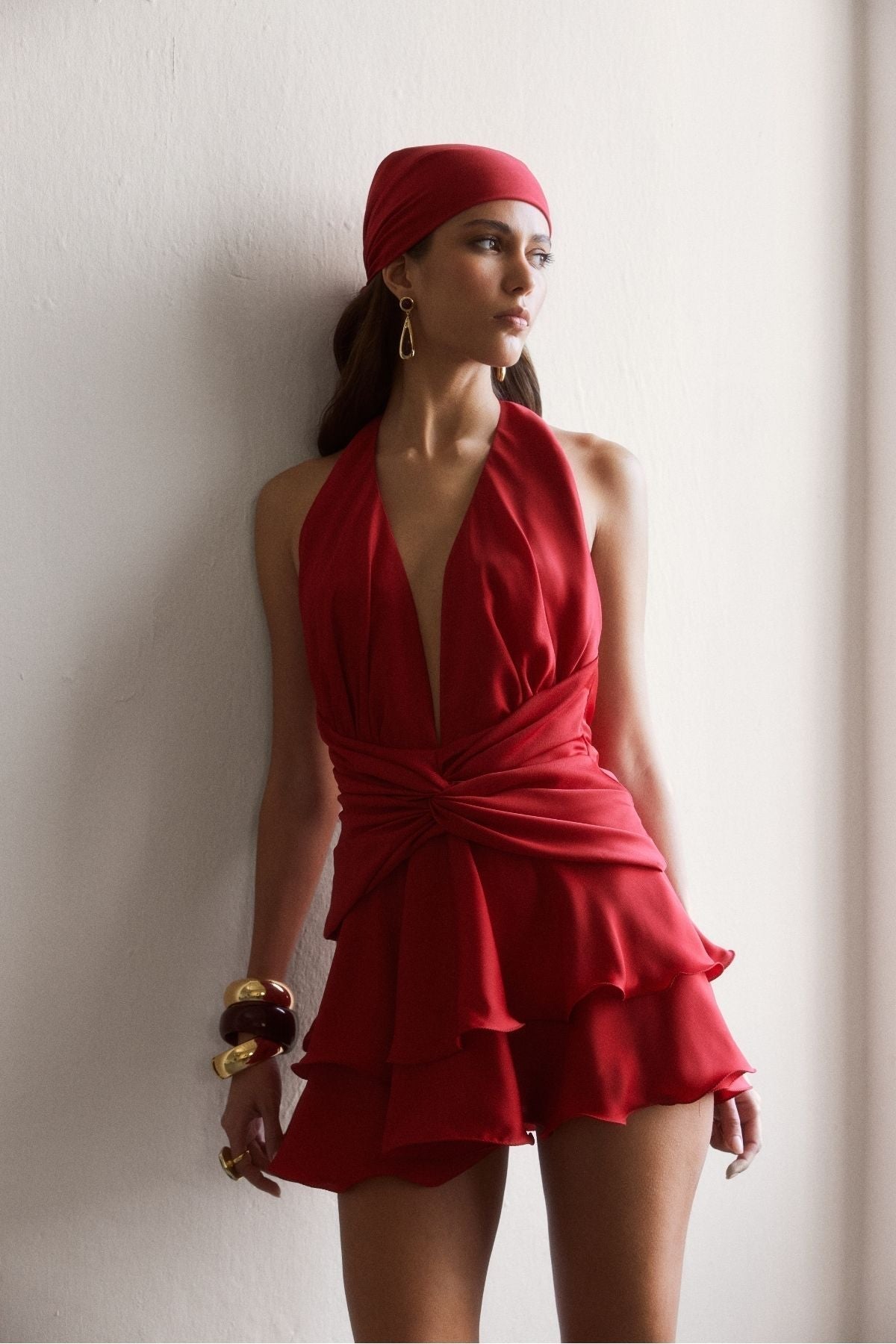
Draping has always been more than a decorative technique. At its most considered, it changes the relationship between fabric and the body, introducing movement, creating tension and allowing a silhouette to shift depending on how it is worn.
In contemporary womenswear, draping offers an alternative to rigid construction. Rather than forcing fabric into a predetermined shape, it allows material, proportion and movement to work together. A fold can define the waist. A gathered surface can alter the balance of a silhouette. A length of fabric can move beyond the body and become part of the gesture of the garment itself.
For BÂROFE, this relationship between form and movement is particularly important. Draping is not treated as an ornament added at the end of a design. It becomes part of how a piece is built, how it frames the body and how it changes in motion.
Fabric Determines the Movement
The character of a drape begins with the fabric.
Satin creates a very different kind of movement from jersey. Its smooth surface reflects light as the fabric folds, making every change in direction more visible.
In the ELIA Dress, fluid red satin is drawn into a defined knot at the waist before opening into a voluminous ruffled skirt. The contrast between a controlled centre and a moving outer silhouette gives the dress its distinctive character.
Jersey behaves differently. Its softness and stretch allow it to follow the body more closely, creating draping that feels less constructed and more continuous.
In the MAERIS Dress, fluid folds work with the stretch of the jersey, allowing the silhouette to form naturally around the body without losing its sense of movement.
Silk blend fabrics introduce another quality. Their lightness allows folds and pleats to respond quickly to motion.
The ISLEA Dress combines an asymmetric waist, soft draping and a double layer pleated skirt to create a silhouette that changes subtly as the wearer moves.
The material is therefore not simply the surface of a garment. It determines how the design behaves.

Draping as a Way of Defining the Body
Draping does not necessarily mean softness.
A carefully positioned fold can make a silhouette more precise. Fabric can be gathered to emphasise the waist, redirected to create asymmetry or extended to shift attention from one part of the body to another.
This tension between fluidity and definition becomes particularly visible in mini silhouettes. The shorter proportion leaves less space for excess fabric, making each fold more deliberate.
The result can feel light without becoming shapeless.
In the VALERIE Dress, a draped neckline works alongside a defined one shoulder construction. An elongated scarf detail extends beyond the mini silhouette, creating movement without disturbing the clarity of the dress itself.
Here, draping becomes a way of controlling contrast. Structure meets fluidity. Fabric can remain close to the body in one area while extending beyond it in another. Stillness and movement can exist within the same design.

The Importance of Asymmetry
Draping and asymmetry naturally work together.
When fabric is redirected across the body, the eye no longer follows a single vertical or horizontal line. One side may carry more volume. A waistline may rise or fall. A neckline may shift away from the centre.
These changes can make even a minimal silhouette feel more dimensional.
Asymmetry also allows a garment to look different depending on viewpoint. A dress that appears clean from the front may reveal a more complex draped construction from the side. Movement introduces another perspective again.
This is one reason draping remains relevant in contemporary design. Some garments cannot be completely understood from a single static image.
Movement as Part of the Design
Fashion is often photographed while completely still, but garments are experienced in motion.
The way a skirt opens while walking, how satin catches the light during a turn or how a draped panel changes position around the body can be as important as the original pattern.
For this reason, movement is not simply an effect that happens after a garment has been designed. It can be considered from the beginning.
Within BÂROFE, this idea appears in different forms, from controlled waist draping and extended scarf details to pleats, ruffles and fabrics that follow the natural movement of the body.
Each technique produces a different result, but the intention remains connected. The silhouette is allowed to exist beyond a single fixed shape.

Draping and Contemporary Femininity
Draping has long been associated with femininity, but contemporary womenswear gives the technique a broader vocabulary.
Softness does not have to mean delicacy. Fluidity can exist beside strong proportions. A draped dress can feel restrained or dramatic depending on its fabric, scale and construction.
What matters is balance.
For BÂROFE, some of the most compelling silhouettes exist between these opposites, where a defined line meets a fluid surface, where structure gives way to movement and where the body remains visible without becoming the only focus of the design.
Draping becomes one of the tools through which that balance can be explored.
Explore the Silhouette
Discover the BÂROFE Mini Dresses collection and explore pieces shaped through draping, proportion, texture and movement.
